 Bella Thornthwaite
The Cold War is often remembered through a perspective of technological innovation and espionage; however, declassified information reveals a far more troubling reality.
In pursuit of national security, the world’s superpowers developed weapons and protocols that threatened the planet’s survival.
The true cost of these covert programs surpassed financial expenditure.
Their inheritance includes ecological devastation, compromised ethical standards, and enduring environmental hazards.
This analysis reviews ten of the most dangerous secret military projects in history, focusing on the consequences they produced. The first category addresses so-called doomsday engines.
The Doomsday Engines
These projects were not exclusively intended to secure military victory; they were engineered on a scale of destruction so vast that their testing posed both localized and global existential threats.
1. Project Pluto (The Unshielded Nuclear Ramjet)
During the late 1950s, the United States attempted to build the ultimate cruise missile. The concept was frighteningly simple: a locomotive-sized missile powered by an unshielded nuclear reactor (the Tory II-C) that would fly at Mach 3 at treetop level.
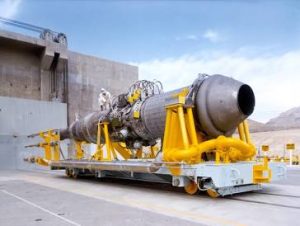
The weapon did not require deployment of its payload to inflict mass casualties. The sonic boom produced by a Mach 3 object at low altitude would have destroyed structures and caused widespread hearing loss. Furthermore, the unshielded reactor would have released highly radioactive fission fragments along the missile’s entire flight path, contaminating the environment.
The Pentagon ultimately canceled the project, not due to technical failure, but because even test flights over international waters would have resulted in a substantial ecological disaster.
2. Project Starfish Prime
In 1962, the U.S. military decided to see what would happen if it detonated a nuclear weapon in space. Launched from Johnston Atoll, a 1.4-megaton warhead was detonated 250 miles above the Pacific Ocean. The resulting electromagnetic pulse (EMP) exceeded physicists’ predictions in magnitude.
It disabled early global satellites, including Telstar 1, and caused widespread electrical failures in Hawaii, located 900 miles from the detonation site. The explosion also temporarily altered the Earth’s magnetic field, generating an artificial radiation belt that persisted for years. Collectively, these effects demonstrated the potential for humanity to irreversibly damage the magnetosphere.phere.
3. The Tsar Bomba
The Soviet Union’s RDS-220 hydrogen bomb remains the most powerful explosive device ever detonated. In 1961, it yielded a blast of 50 megatons, more than 3,300 times the power of the bomb dropped on Hiroshima.
The Tsar Bomba was initially designed as a 100-megaton device. Soviet scientists reduced its yield by 50 percent due to concerns that the resulting fallout would affect their own territory and potentially ignite the atmosphere. Even at half capacity, the blast wave circled the Earth three times, and the flash was visible from 600 miles away. The test confirmed the enormous scale of the threat posed by such weapons.
Geological Time Bombs
In some instances, the danger posed by military projects does not arise from immediate destruction but from the gradual, inevitable consequences of altering Earth’s geology. The following cases illustrate this risk.
4. Project Iceworm (Camp Century)
Under the guise of a scientific research outpost called “Camp Century,” the U.S. Army Corps of Engineers built a massive subterranean city deep inside the Greenland ice sheet in 1959.

The actual objective was Project Iceworm, which aimed to construct a 3,000-mile network of tunnels to house 600 nuclear missiles targeting the Soviet Union. The military abandoned the base in 1966 after discovering that glacial movement was more rapid and unpredictable than anticipated, posing a threat to the tunnels’ structural strength.
The infrastructure was left in place under the assumption that the ice would permanently entomb it. However, accelerated climate change is now causing the ice sheet to melt. Scientists estimate that by the end of this century, 200,000 liters of diesel fuel, polychlorinated biphenyls (PCBs), and a significant quantity of radioactive coolant will be released, resulting in a severe ecological hazard.
5. Project Chariot
In 1958, physicist Edward Teller (the “father of the hydrogen bomb”) proposed using five thermonuclear explosions to artificially excavate a deep-water harbor at Cape Thompson, Alaska.
The project completely disregarded the indigenous Inupiat people living just miles from the proposed blast site. The government even began burying radioactive tracer materials in the soil to study water runoff. Project Chariot was ultimately halted by intense pushback from early environmentalists and the local population, averting what would have been a permanent radioactive scar on the Alaskan coastline.
6. Project Seal
During World War II, the United States and New Zealand conducted a joint, top-secret operation to arm the ocean. Project Seal tested the feasibility of “tsunami bombs” detonating precise arrays of underwater explosives to trigger massive, artificial tidal waves capable of wiping out enemy coastal cities.
Tests conducted off the coast of New Caledonia demonstrated that a sequence of ten large explosions could generate a 33-foot tsunami. The project was ultimately discontinued in favor of nuclear weapons development. Nevertheless, the data indicate early efforts to manipulate geological forces for military purposes. This approach to control is apparent in the subsequent category.
Ethical Overreach
The final category of danger moves away from explosives and focuses on the destruction of human autonomy, treating civilian populations as collateral damage in the name of data collection. From there, the projects grow even more invasive.
7. Operation LAC (Large Area Coverage)
During the 1950s, the U.S. Army Chemical Corps conducted biological warfare dispersion tests by flying planes over unsuspecting American cities, most notably St. Louis, Missouri.
They sprayed thousands of pounds of zinc cadmium sulfide, a fluorescent particulate, over heavily populated, low-income neighborhoods to simulate how a chemical weapon would spread.
The military treated its own citizens as unwitting test subjects. While the military claimed the compound was harmless, long-term exposure to cadmium is now known to be highly toxic and carcinogenic, bringing about localized spikes in health crises decades later. That same disregard for human subjects defined the next program.
8. Soviet Biopreparat
While the U.S. had biological weapons programs, the Soviet Union’s “Biopreparat” took it to a terrifying industrial scale. Hidden behind a massive network of civilian pharmaceutical fronts, the program weaponized anthrax, smallpox, and the plague.
The sheer danger of mass-producing organic weapons was realized in 1979 during the Sverdlovsk anthrax leak. A missing filter at a military facility released a cloud of weaponized anthrax spores over the city, killing roughly 100 people. It remains one of the deadliest accidental releases of a biological weapon in history. The next example turns from biological danger to direct psychological harm.
9. Project MKUltra
Beginning in 1953, the CIA launched a covert, illegal human experimentation program designed to develop mind-control and psychological torture techniques.
Seeking an edge in interrogations, the agency administered LSD, electroshock therapy, and sensory deprivation to unwitting civilians, military personnel, and prisoners.
The ethical fallout was staggering. MKUltra actively destroyed the minds of its subjects in the pursuit of national security, proving that intelligence agencies were willing to completely abandon human rights to gain a tactical advantage. That mindset continued in a different form in the final case.
10. Operation Paperclip
Following the fall of Nazi Germany, the United States (and the Soviet Union, in a parallel operation) rushed to secure the brightest scientific minds of the Third Reich. Operation Paperclip brought over 1,600 German scientists, engineers, and technicians to the U.S., including Wernher von Braun.
The danger here wasn’t a physical weapon, but the complete collapse of moral accountability. Many of these scientists were deeply complicit in war crimes and the use of slave labor.
By absorbing them to win the Space Race and advance missile technology, the government established a dangerous precedent: extreme intelligence and utility can buy a pardon for the worst atrocities imaginable. In that sense, the damage went well beyond the domain of science.
The Heritage We Inherited
The secret projects of the 20th century were born from a culture of uncontrolled paranoia. Today, as we watch ice shelves melt over Camp Century and manage the lingering health effects in cities like St. Louis, we are forced to reckon with the aftermath.
The most dangerous military projects aren’t always the ones that detonate; they are the ones that quietly poison the earth, the ocean, and the principled foundations of the nations that build them. That is the legacy they left behind.